
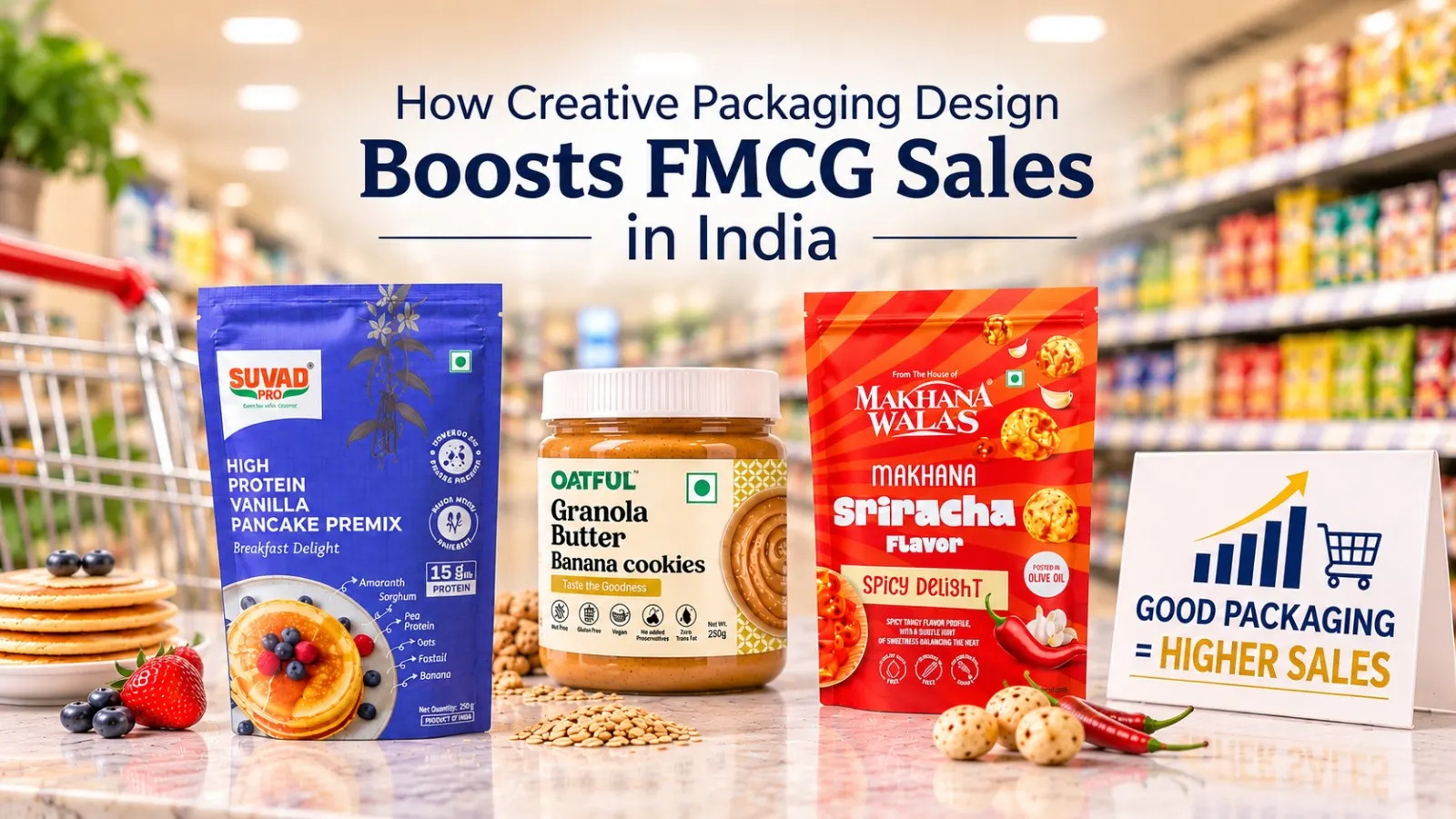
Most customers don’t spend much time comparing every product on the shelf. They glance at a few options, recognise a familiar brand, notice an attractive pack, and buy it. Sometimes the packaging captures their attention before they even know what the product is about.
That is the reality of India’s FMCG industry. With hundreds of brands competing across food, beverages, personal care, and household products, getting noticed has become extremely difficult. A good product matters, but getting someone to pick it up in the first place is a different challenge altogether. This is where creative packaging design makes a real difference, giving the product a personality of its own.
Packaging is no longer just about protecting a product until it reaches the consumer or displaying an ingredients label. It has become an important part of how a brand communicates, builds trust, and influences buying decisions. Well-thought-out packaging can help FMCG brands attract new customers and stand out in a highly competitive market.
Why Packaging Matters More Than You Think
Think about buying a packet of chips. You walk into your neighbourhood kirana store and find five brands offering similar flavours at almost the same price. What makes you choose one over the others?
It could be a brand you already know. But sometimes it is simply the colour, design, or overall look of the pack that catches your eye. That is how powerful packaging can be. On the other hand, poorly designed packaging can create doubts about a product before the customer has even tried it.
This is especially true in India, where consumers have plenty of choices across price segments. Brands need to communicate quality, value, and trust without expecting customers to spend much time understanding the product. India’s food and beverage packaging market is estimated to reach USD 40 billion in 2026, which shows why packaging has become such an important investment for brands looking to grow.
Ways Creative Packaging Design Helps FMCG Brands Increase Sales
1. Standing Out on Crowded Shelves and Quick Commerce Apps
A few years ago, FMCG brands focused mainly on standing out in supermarkets and neighbourhood stores. Today, there is another space they must compete in: the smartphone screen.
Platforms like Blinkit, Zepto, and Instamart have changed how Indians shop for everyday products. Customers can browse snacks, beverages, groceries, and personal care items without stepping out of their homes. But this also means brands are competing for attention in a much smaller space than a physical store.
Imagine your product appearing alongside four similar products on a quick commerce app. Your packaging may look impressive in person, but does it look equally attractive as a small thumbnail? That is the question brands need to ask while planning their packaging.
Simple layouts, bold colours, clear product images, and readable fonts can make a significant difference. Customers should be able to identify the brand and product without zooming in. The same principle applies in physical retail: packaging must be visible, easy to recognise, and different enough to catch attention. Your packaging should work wherever customers discover your product.
2. Building an Emotional Connection
People don’t always buy products simply because they need them. Sometimes they buy because they connect with the brand, its story, or the feeling it creates. Packaging can help build that connection.
Take Paper Boat as an example. When Hector Beverages launched the brand in 2013, it chose a different approach to beverage packaging. Instead of following the usual colourful fruit-drink style, Paper Boat introduced a distinctive pouch design along with nostalgic storytelling around childhood memories, summers, and traditional Indian drinks such as Aam Panna. The packaging gave the brand a personality of its own. It wasn’t just selling a beverage; it was reminding people of familiar experiences.
Another interesting example is The Whole Truth. In a category where many brands focus on fitness claims and complicated nutritional benefits, it chose to keep things straightforward. Its packaging prominently displays ingredients, making it easier for customers to understand what they are consuming. Brands like Epigamia and Sleepy Owl have also used distinctive packaging to establish their identity in competitive categories.
These examples show that packaging doesn’t always need to be loud or complicated. Sometimes a clear brand personality and a consistent design approach are enough to make a product memorable and set it apart from competitors.
3. Designing for Indian Consumers and Their Buying Habits
India is a highly diverse market, and consumer preferences can vary significantly from one region to another. What works in a premium supermarket in Mumbai may not work in a neighbourhood kirana store in a smaller town. This is why FMCG brands need to understand their target audience before finalising their packaging.
For many Indian households, affordability plays an important role in everyday purchases. Small packs and sachets priced at ₹5 or ₹10 allow customers to try products without making a bigger commitment. Shampoo sachets, small detergent packs, and single-serve snack packs are good examples of how packaging helps brands reach consumers across income groups.
But affordability isn’t the only consideration. Packaging must also be practical: easy to open, convenient to carry, and capable of protecting the product during storage and transportation. For instance, a biscuit packet should stay fresh even when stored in a local shop during India’s humid monsoon season. Brands that understand these everyday needs can create packaging that is both attractive and useful.
4. Making Products Look Worth Their Price
Have you ever picked up two similar products and wondered why one costs ₹120 while the other costs ₹40? The difference isn’t always in the product itself. Sometimes packaging shapes how customers perceive its value.
A well-designed container, a clean label, a premium finish, or even a thoughtfully designed resealable lid can make a product feel more valuable. Consider skincare: a face cream in a well-designed jar with a clean label and premium finish creates a very different impression from the same cream in an ordinary container. Minimalist, a skincare brand in the mid-price segment, is a good example. Its clean, minimal design language makes its products look more premium than competitors in the same segment, giving it an edge.
This doesn’t mean brands should spend heavily on expensive materials. The goal is to ensure the packaging matches the product’s positioning and price.
Brands can also use QR codes to share additional information about ingredients, sourcing, nutrition, and product benefits. These small additions help customers understand what they are paying for and give them more reason to trust the brand. Ultimately, good packaging should make a product feel worth its price without making unnecessary promises.
5. Keeping Up with Sustainable Packaging Trends
Consumers are becoming more conscious of the products they buy, particularly younger buyers, who increasingly pay attention to how brands approach sustainability. For FMCG companies, this means thinking beyond attractive design and convenience. Many brands are exploring recyclable pouches, paper-based packaging, refillable containers, and materials that use less plastic.
However, there is a difference between packaging that looks environmentally friendly and packaging that is genuinely sustainable. Customers are increasingly aware of misleading green claims, so brands need to be transparent about their efforts.
The challenge lies in balancing sustainability, affordability, product protection, and convenience. Brands that get this balance right can reduce their environmental impact while building stronger relationships with conscious consumers.
Creative Packaging Ideas FMCG Brands Should Consider
Here are some practical ideas worth considering:
- Keep key information visible: Your brand name, product category, and flavour should be easy to identify. Customers shouldn’t have to work out what’s inside the pack.
- Understand your competitors: Before finalising your design, study other products in your category. If every competing brand uses similar colours and layouts, a different visual approach can help your product stand out.
- Think about future launches: Don’t design packaging for just one product. Build a consistent design system that can accommodate new flavours, variants, and pack sizes as your business grows.
- Don’t overlook regulations: For food products, make sure your design leaves enough space for mandatory FSSAI information, nutritional details, ingredient lists, and other required declarations.
- Test in real situations: View your design from a distance, place it alongside competing products, and check how it looks as a small image on quick commerce platforms. What looks good on a computer screen may not work as well in a kirana store.
Choosing the Right Packaging Design Partner
A good packaging idea is one thing; turning it into physical packaging that works in the market is another. Successful packaging design must consider consumer behaviour, brand positioning, shelf visibility, material selection, and production costs. This is why many growing FMCG brands prefer specialised packaging design agencies over general graphic design services.
A good packaging design partner will take the time to understand your product, target audience, and the market segment you are entering. Whether you are looking for product packaging design services or comparing packaging design agencies in Pune, choose a team that understands both the creative and technical sides of packaging. After all, a design may look impressive in a presentation, but it must also work when printed, packed, transported, and displayed on retail shelves and e-commerce platforms.
Conclusion
In the FMCG industry, getting a customer to notice your product is often the first challenge a brand must overcome. With so many brands competing for attention, packaging can make the difference between a product that gets picked up and one that gets overlooked. Good packaging helps brands communicate their identity, build trust, and give customers a reason to try something new.
Looking for Packaging Design Services in Pune?
White Warbler Communication is a 360° creative agency in Pune with nearly two decades of experience in branding, packaging, web, and marketing. Our packaging design services focus on creating designs that do more than look good. We consider your brand identity, target audience, product category, product segment, and market positioning to develop packaging that connects with customers and performs in real retail environments. Whether you are launching a new product, expanding your product line, or refreshing your existing packaging, we can help bring your ideas to life.