
For food brands today, packaging has become a decision point long before taste ever does. Customers see the pack first. They judge it quickly. And more often than not, they decide whether the brand feels responsible, modern, or outdated based on what that packaging represents.
Sustainability is no longer a niche conversation. It has entered everyday buying behaviour. Food brands that once focused only on cost and shelf life are now being questioned about materials, waste, recyclability, and long term environmental impact. This shift is not sudden, but it is permanent.
What is changing now is how packaging materials themselves are shaping brand trust.
Why food brands are being pushed to rethink packaging
Customers are more informed than ever. They read labels. They search online. They discuss brands on social media. Packaging is no longer silent. It communicates values whether a brand intends it or not.
Plastic heavy packaging today creates hesitation. Eco friendly packaging, on the other hand, creates comfort. It tells customers that the brand is thinking beyond sales. That single perception plays a strong role in repeat purchase and loyalty.
From a business point of view, sustainable packaging also supports digital marketing. Brands using responsible materials find it easier to tell stories online. Sustainability driven content performs better across social media marketing, content marketing, and even search driven discovery.
This is why sustainable materials are not just a production choice anymore. They are a brand strategy decision.
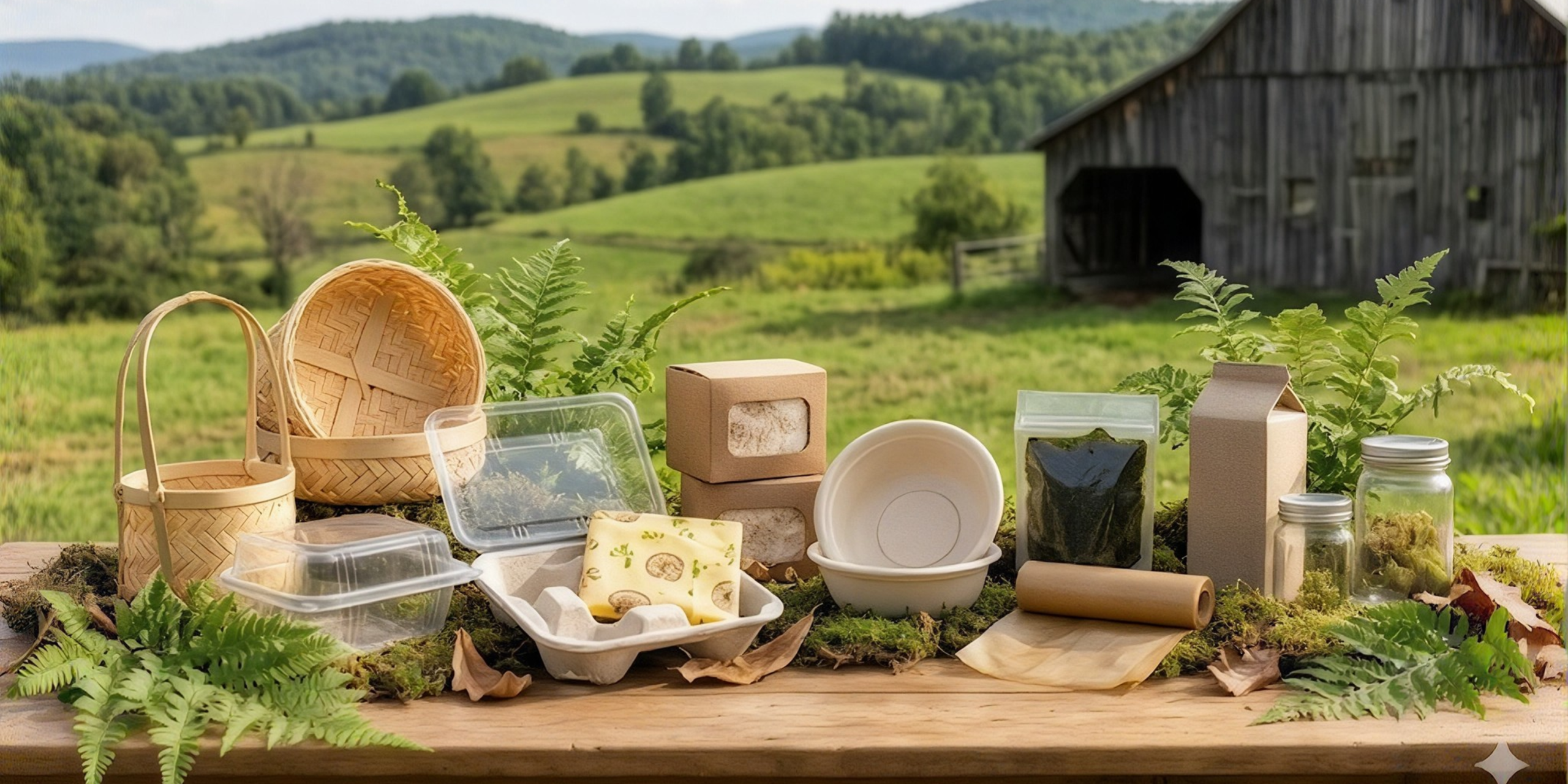
Sustainable materials changing how food brands package product
Food brands today are experimenting, testing, and slowly shifting toward materials that reduce environmental harm without compromising safety or quality.
Sugarcane bagasse has become one of the most practical alternatives. Since it is a byproduct of sugar production, it reduces waste and works well for food containers, trays, and takeaway packaging. Brands using it often highlight natural texture and minimal design to reinforce eco friendly packaging.
Paper based packaging has evolved significantly. Earlier it lacked strength, but today with sustainable coatings, paper is being used for snacks, cereals, dry foods, and even some moisture sensitive items. It also allows creative packaging design without looking excessive.
Cornstarch based bioplastics are helping brands move away from petroleum based plastic while maintaining flexibility. Many food brands prefer this material because it feels familiar to consumers while being more environmentally responsible.
Mushroom based packaging is still rare, but it is gaining attention. It sends a strong signal of innovation and intent. Brands that use it are often premium or experimental, but the material leaves a strong impression on consumers.
Bamboo packaging continues to grow, especially in premium food categories. It carries a natural, earthy feel and is often associated with wellness and purity. Its visual appeal helps brands stand out both on shelves and in online listings.
Recycled paper and cardboard remain widely used and trusted. When used honestly, without overclaiming sustainability, they help reduce waste and support circular packaging systems.
Glass packaging has not lost relevance. While heavier, it communicates purity and trust strongly. For products like honey, sauces, spreads, and beverages, glass packaging still feels reassuring and premium.
Aluminium is also widely recycled and continues to be used where protection and shelf life are critical. When combined with minimal outer packaging, it helps reduce overall material usage.
Edible packaging is still experimental but represents where the future could head. While adoption is slow, it attracts curiosity and opens conversations around innovation.
Compostable flexible films are becoming more common for snacks and ready to eat products. They allow brands to keep pouch based formats while reducing long term waste impact.
Each of these materials brings limitations as well. No sustainable solution is perfect. What matters is intent, transparency, and gradual improvement.
How sustainable packaging is influencing consumer behaviour
Customers today are not expecting perfection. They are expecting honesty.
When a food brand clearly communicates what its packaging is made of and why that choice was made, customers respond positively. They feel informed rather than marketed to.
Sustainable packaging also changes how long a customer stays with a brand. Products that feel responsible are less likely to be replaced easily. This directly impacts loyalty.
There is also a strong emotional aspect. People feel better buying products that align with their values. That emotional satisfaction often outweighs small price differences.
The role of digital marketing in sustainability storytelling
Sustainable packaging needs explanation. Without communication, even the best material choice can go unnoticed.
This is where digital marketing services play a role. Through content marketing, brands explain sourcing, packaging choices, and disposal methods. Through social media marketing, they show the process visually. Through SEO services, they attract audiences already searching for eco friendly food brands.
Packaging becomes part of the online brand presence. It is photographed, discussed, reviewed, and shared. Brands that integrate sustainability into their digital transformation build stronger credibility.
At White Warbler Communications, we often see that brands who align packaging design with digital marketing strategy are able to communicate sustainability more clearly and confidently. The story feels intentional, not forced.
Challenges brands face while adopting sustainable materials
The shift is not without difficulty. Sustainable materials can be more expensive. Availability can vary. Some materials behave differently in storage or transit.
Food brands also need to ensure that safety and shelf life are not compromised. This requires testing, iteration, and sometimes phased rollout.
Another challenge is customer education. If customers do not understand how to dispose of sustainable packaging, the effort loses impact. Clear instructions and simple messaging help bridge this gap.
These challenges are manageable when brands treat sustainability as a journey rather than a one time claim.
How food brands should approach sustainable packaging
The smartest approach is gradual and thoughtful.
Start by identifying one product line where material change is feasible. Test response. Learn from feedback. Improve communication.
Work closely with packaging design services that understand both material behaviour and visual identity. Sustainable packaging should still look appealing and aligned with brand positioning.
Use digital marketing to explain the shift. Not as a campaign, but as a conversation.
Looking ahead
Sustainable packaging is not a future idea anymore. It is shaping decisions today. Food brands that adapt early are building long term trust. Those who delay may struggle to keep up with changing expectations.
Materials will continue to evolve. Costs will stabilise. Consumer awareness will grow. What will matter most is whether brands act with intention or react under pressure.
The sustainable packaging revolution is not about replacing plastic overnight. It is about making better decisions step by step. Materials like sugarcane bagasse, paper based packaging, compostable films, and bioplastics are helping food brands move in the right direction.
When sustainability is supported by clear packaging design, honest brand strategy, and consistent digital marketing, it stops being a trend and becomes a strength.
At White Warbler Communications, we believe sustainable packaging should feel natural, not performative. It should support the product, reflect the brand, and respect the consumer.
Food brands that understand this will not only reduce environmental impact, but also build stronger relationships with the people who choose them every day.