
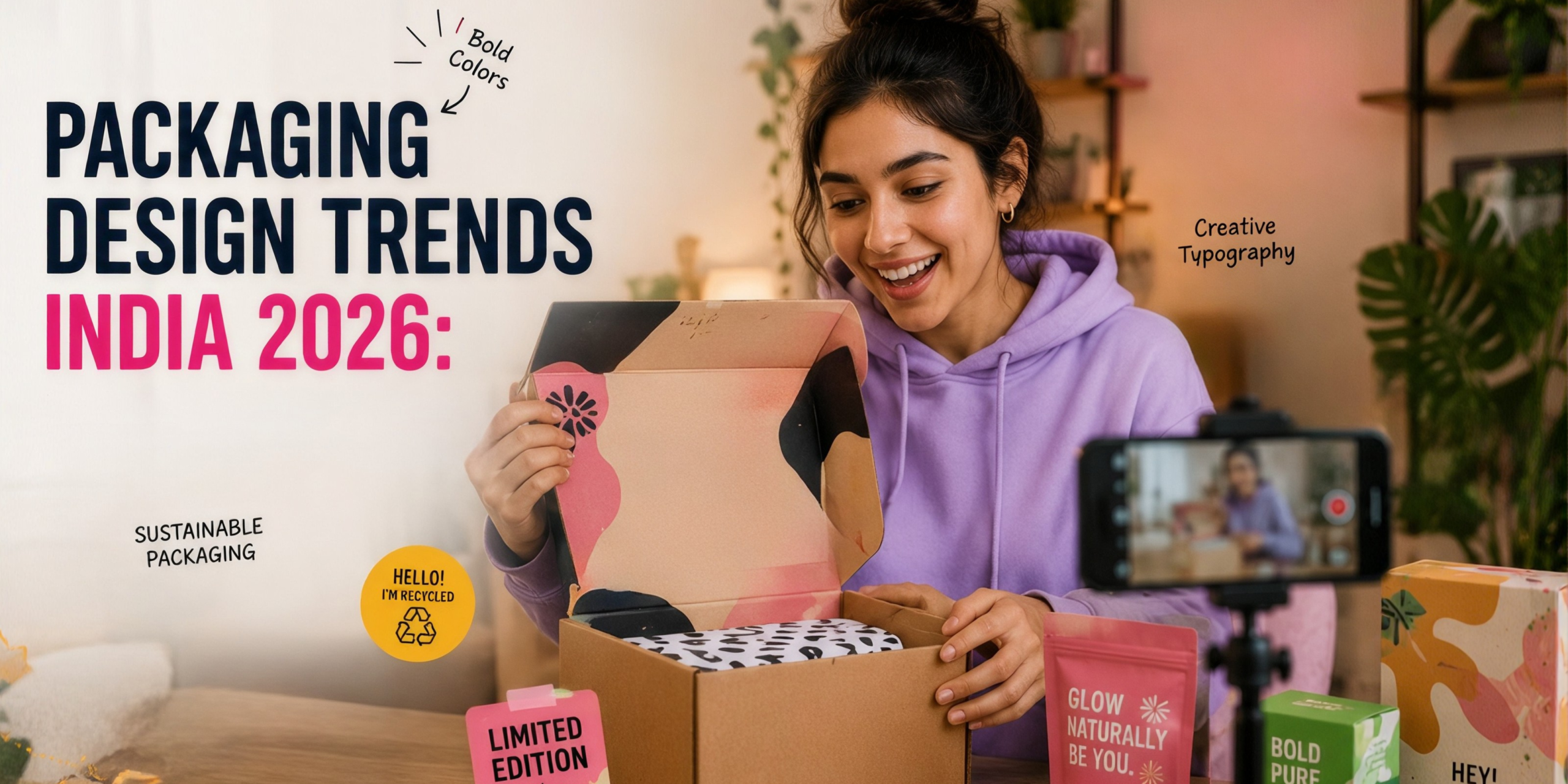
Have you ever paused to notice the packaging when your online order arrives? Beyond the product itself, the material, print quality, typography, and messaging all contribute to a larger brand experience. In today’s evolving market, this experience has become just as important as the product inside.
With increasing awareness around sustainability, many brands are now adopting eco-friendly materials such as kraft paper and recyclable packaging formats. However, what truly captures attention is the design language and communication on the packaging. It feels more relatable, expressive, and aligned with modern consumer behavior especially with the rise of Gen Z packaging in India.
This shift highlights a powerful reality: packaging design trends in India 2026 are no longer limited to functionality. Packaging has evolved into a strategic blend of experience, storytelling, and marketing.
Understanding Packaging Design Trends India 2026
The packaging industry in India is undergoing a transformation driven by changing consumer expectations, digital influence, and brand differentiation. From structural design to visual storytelling, every element now plays a crucial role.
1. Human-Centric Luxury Packaging
Luxury packaging continues to grow, but with a more inclusive and emotionally engaging approach. Instead of being overly extravagant, modern premium packaging focuses on warmth, simplicity, and human connection.
High-quality materials, subtle foil detailing, refined textures, and balanced color palettes are being used to create a premium yet approachable feel. This evolution reflects how Gen Z packaging in India values authenticity over excess.
2. Bold Colors and Playful Visual Language
One of the most visible packaging design trends in India 2026 is the use of bold, expressive, and playful design elements. Brands are blending traditional motifs, archival graphics, and vintage inspiration with contemporary layouts.
This fusion creates visually engaging packaging that stands out both on shelves and on digital platforms. The use of vibrant colors and experimental compositions makes packaging more dynamic and appealing to younger audiences.
3. Character-Led Packaging Design
Characters are increasingly being used to humanize brands. These are not just decorative visuals; they represent personality, emotion, and storytelling.
Character-led packaging builds a deeper emotional connection with consumers, making products more memorable. It is especially effective in Gen Z packaging in India, where relatability and identity play a key role in purchasing decisions.
4. Personalized and Limited-Edition Packaging
Exclusivity has become a major driver of engagement. Limited-edition packaging and personalized designs create a sense of uniqueness and ownership. For example limited editions of Mac- Donald’s Happy meal Toy gift, Coca-Cola limited edition of superheroes.
Customized labels, small-batch prints, and distinctive visual variations transform packaging into a collectible experience, strengthening brand recall and loyalty.
5. Digital and Interactive Packaging
Packaging is rapidly evolving into an interactive medium. With the integration of QR codes and Augmented Reality (AR), brands are creating immersive experiences that extend beyond the physical product.
Consumers can engage with packaging digitally accessing brand stories, product details, or exclusive content. This innovation is becoming a key differentiator for brands working with a D2C packaging agency Pune or similar creative partners across India.
Sustainable Packaging India 2026: A Critical Priority
Sustainability is no longer optional; it is a fundamental expectation. Sustainable packaging in India 2026 reflects a conscious effort by brands to reduce environmental impact while maintaining design excellence.
Eco-friendly packaging solutions include:
- Recyclable paper and cardboard
- Biodegradable materials such as mushroom mycelium and seaweed
- Cornstarch-based bioplastics
- Natural fiber alternatives like cassava root and wool
Modern consumers, particularly Gen Z, actively support brands that demonstrate environmental responsibility. As a result, sustainable packaging India 2026 is not just a trend, it is a business necessity.
Typography-Led Packaging Design
Typography has emerged as a dominant visual element in packaging design. In this approach, the brand name itself becomes the primary design feature.
Clean, bold, and expressive typography ensures clarity, recognition, and consistency. This minimalist yet powerful strategy aligns perfectly with modern branding, especially within Gen Z packaging in India, where simplicity and clarity are highly valued.
Cultural Storytelling Through Packaging
Cultural storytelling is redefining how brands connect with consumers. Packaging is being used to communicate heritage, origin, craftsmanship, and brand values through visual narratives.
Indian brands are increasingly showcasing their roots highlighting local traditions, production processes, and regional identity. Even platforms like Amazon India have explored storytelling through packaging to create a more human connection.
This approach transforms packaging into an immersive storytelling medium, making it more meaningful and engaging.
The Influence of Social Media and Unboxing Culture
The impact of Instagram on packaging design cannot be overstated. Social media has turned packaging into a shareable asset, where every product has the potential to become content.
Unboxing has evolved into a powerful marketing phenomenon. Consumers—especially Gen Z—are drawn to packaging that looks visually appealing on camera. Elements such as clean layouts, bold typography, premium finishes, and thoughtful detailing directly influence shareability.
This trend has led to increased demand for experience-driven packaging, where brands focus on creating memorable unboxing moments.
How D2C Brands Are Shaping Packaging in India
The rise of direct-to-consumer brands has significantly accelerated innovation in packaging. Every D2C packaging agency Pune and across India is now focused on delivering packaging solutions that combine design, functionality, and brand storytelling.
Key Industry Shifts:
- Demand for Premium Packaging
D2C brands are prioritizing high-quality, visually appealing packaging to create a strong first impression. - Export-Oriented Design
Indian brands expanding globally require packaging that meets international standards while maintaining cultural identity. - Experience-Driven Packaging
Packaging is designed to enhance the overall customer journey, from delivery to unboxing. - Brand Consistency Across Touchpoints
Packaging is now expected to align seamlessly with digital marketing, social media, and overall brand communication.
Conclusion
The evolution of packaging design trends India 2026 reflects a deeper transformation in consumer behavior and brand strategy. Influenced by Gen Z preferences, sustainability, digital platforms, and the rapid growth of D2C brands, packaging has become a critical component of brand identity.
From Gen Z packaging in India to sustainable packaging India 2026, and from interactive experiences to premium design, every element now contributes to how a brand is perceived and remembered.
In this new era, packaging is no longer just functional, it is experiential, expressive, and impactful. Brands that embrace these changes will not only stand out in the market but also build meaningful and lasting connections with their audience.
FAQ’s
1) What are the packaging design trends in 2026?
In 2026, packaging trends are evolving rapidly. The focus is on human-centric luxury packaging, the use of bold colors and playful language, character-led packaging design, and storytelling through packaging.
2) What role does personalization play in modern packaging design?
Modern packaging designs are becoming more personalized to build a stronger connection with consumers. Brands are effectively using social media platforms for this purpose. Custom labels, regional elements, and limited editions help consumers feel recognized and valued.
3) Why is human-led design important in the age of AI?
AI can generate designs instantly; however, human-led design brings authenticity, emotion, and craftsmanship. It makes designs more creative, meaningful, and relatable, which is why human-led design remains important.
4) Is social media influencing the packaging industry?
Yes, social media strongly influences the packaging industry by encouraging brands to prioritize Instagrammable, aesthetic, sustainable, and shareable unboxing experiences.
5) Where can you get the best trendy packaging solutions in India?
White Warbler Communication is one of the leading packaging and printing solution providers in India. It is a digital marketing company that helps brands grow through strategy, design, and digital innovation.